
The Complete Lore & History of Fatal Frame II: Crimson Butterfly
Now that the Fatal Frame II: Crimson Butterfly Remake officially launched yesterday, March 12, 2026, a whole new generation of gamers is stepping into the suffocating fog of Minakami Village. Returning to this classic IP is not merely a nostalgia trip; it is an exploration of one of the finest psychological horror narratives ever put to code. By utilizing the emotional vulnerability of its protagonists and leaning heavily into grim Japanese folklore, it crafted a nightmare that still holds up beautifully today.
From the original 2003 PlayStation 2 release, through various technological hurdles, up to this phenomenal 2026 next-gen reimagining, the history of this game is an incredible journey. Here are the zero-fluff facts on how Mio and Mayu Amakura cemented their legacy in survival horror history.
Key Takeaways (2026)
- Studio Origins: Created by Tecmo in 2003, pivoting from the extreme difficulty of the first Fatal Frame to focus on a deeper, emotional tragedy involving twin sisters.
- The Lore of Minakami Village: The narrative focuses on a cursed village eternally trapped in darkness due to "The Repentance"—a failed sacrificial ritual requiring twins to seal the Hellish Abyss.
- Evolution: The franchise consistently iterated on its horror, moving from the Xbox Director's Cut in 2004 to the 2012 Wii Edition featuring dynamic over-the-shoulder perspectives.
- The 2026 Remake: Launched on March 12, 2026, by Team NINJA, the complete overhaul features modernized visuals, expanded twin-bond mechanics, and new lore tying into the broader universe.
- Legacy: Widely celebrated as a pinnacle of atmospheric terror that relies on dread and vulnerability rather than sheer jump scares or combat power.
Disclaimer: The links provided herein are affiliate links. If you choose to use them, I may earn a commission from the platform owner, at no extra cost to you. This helps support my work and allows me to continue to provide valuable content. Thank you!
The Origins of Minakami Village (2003)
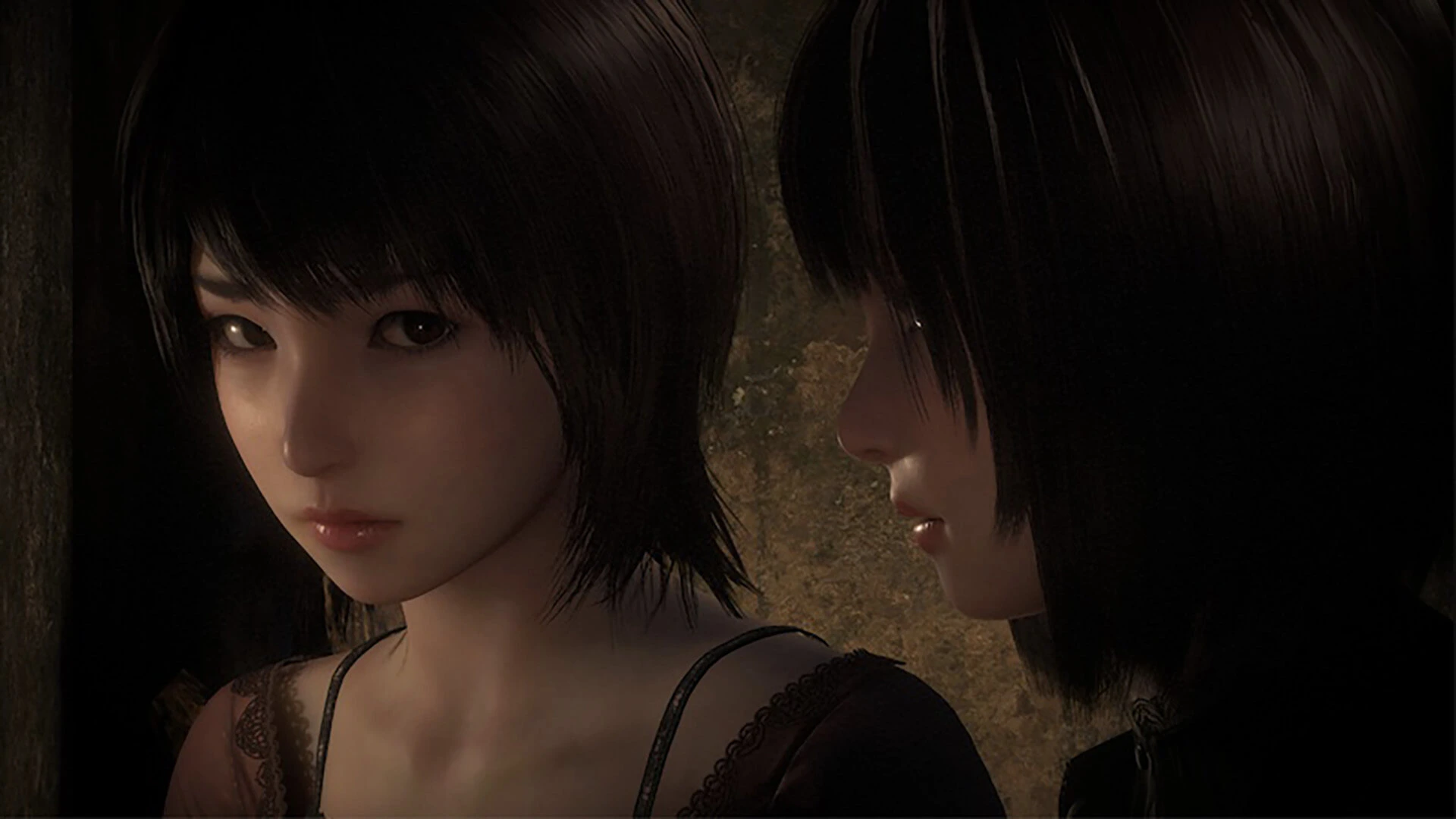
Following the moderate success of the 2001 original, Tecmo began drafting a sequel. Director Makoto Shibata and Producer Keisuke Kikuchi noticed that the first game was so relentlessly punishing that many players simply quit. They shifted their strategy: make the mechanical navigation slightly more forgiving, while ramping the psychological terror up to eleven.
Released in November 2003 for the PlayStation 2, Crimson Butterfly traded a singular haunted mansion for an expansive, doomed settlement. Armed only with the Camera Obscura—an antique device capable of exorcising spirits—players were forced to wait until ghosts were inches from their face to maximize damage, brilliantly weaponizing the player's own panic.
Development Hurdles & The Director's Cut (2004)
Developing for the PlayStation 2 had severe limitations regarding particle lighting and volumetric fog, which were essential for rendering the glowing crimson butterflies and ethereal spirits. The team pushed the hardware incredibly hard, resulting in the game's iconic, unsettling film-grain aesthetic that hid graphical limitations while massively boosting the horror atmosphere.
By late 2004, Tecmo released a "Director's Cut" on the original Xbox. It wasn't just a simple port; the team added new endings, tightened hitboxes, and introduced a wildly terrifying first-person mode, heavily influenced by Western shooters like Halo, but utilized to force players into agonizingly close encounters with the supernatural.
The Wii Edition Rebirth (2012)

As the industry pivoted to action-heavy games in the late 2000s, traditional survival horror struggled. Tecmo Koei partnered with Nintendo to completely remake the game as Project Zero 2: Wii Edition in 2012. Shifting away from fixed camera angles, the game adopted a dynamic over-the-shoulder perspective and required players to physically aim the Camera Obscura using motion controls, deeply immersing them in the frantic battles.
The 2026 Remake Launch & Legacy
Now, as of March 12, 2026, Team NINJA has completely resurrected the nightmare for the PS5, Xbox Series X|S, PC, and Nintendo Switch 2. Moving away from merely upscaling old assets, the studio rebuilt Minakami Village from the ground up on a modern engine. A brilliant new interactive mechanic allows players to physical hold hands with Mayu to guide her, making the inevitable moments where the twins are separated feel viscerally devastating.
Over two decades after its conception, Fatal Frame II continues to prove that genuine horror stems from atmosphere, folklore, and tragic storytelling. The 2026 launch serves not just as a triumphant return, but as the definitive way to experience one of gaming's darkest masterpieces.
Frequently Asked Questions
When did the Fatal Frame II: Crimson Butterfly Remake launch?
The highly anticipated remake of Fatal Frame II officially launched worldwide on March 12, 2026, for modern platforms including PS5, Xbox Series X|S, PC, and Nintendo Switch 2.
What is the story of Fatal Frame II: Crimson Butterfly?
The story follows twin sisters Mio and Mayu Amakura as they become hopelessly trapped in Minakami Village. The village is cursed to repeat a failed ancient ritual known as 'The Repentance,' which demands the sacrifice of twins to appease malevolent forces.
Who originally developed Fatal Frame II?
The original game was created by Tecmo (now Koei Tecmo) in 2003, directed by Makoto Shibata and produced by Keisuke Kikuchi. The 2026 Remake was handled directly by Team NINJA.
Author Details

Mazen (Mithrie) Turkmani
I have been creating gaming content since August 2013, and went full-time in 2018. Since then, I have published hundreds of gaming news videos and articles. I have had a passion for gaming for more than 30 years!
Ownership and Funding
Mithrie.com is a Gaming News website owned and operated by Mazen Turkmani. I am an independent individual and not part of any company or entity.
Advertising Policy
Mithrie.com is supported by advertising revenue to sustain independent gaming journalism. We utilize partners such as Google AdSense and may work with other ad networks in the future. Editorial content remains objective and is not influenced by advertisers or sponsorships unless explicitly stated.
Use of Automated Content
Mithrie.com uses AI tools (including ChatGPT and Google Gemini) to assist in structuring and formatting content. All news stories are fact-checked, edited, and verified by Mazen Turkmani to ensure accuracy and journalistic integrity.
News Selection and Presentation
The news stories on Mithrie.com are selected by me based on their relevance to the gaming community. I strive to present the news in a fair and unbiased manner.